KEVLAR
A streetwear label needed a shop. What it got was a complete commerce platform: storefront, admin, inventory down to the SKU, live analytics and a double entry accounting ledger, all built from nothing.
The brief
KEVLAR is street armour out of Auckland, sold on presence. The storefront had to feel like the label: black, brutal, photography carrying everything and typography doing the shouting. That much is web design.
The harder half was behind it. Running an apparel label on a hosted platform means paying a percentage forever, fighting someone else’s inventory model and exporting to a spreadsheet every time the accountant asks a question. The brief became build the whole thing, front and back, owned outright.
The storefront
Full bleed film on the hero, new arrivals as a four across strip priced in place, and a Worn In The Streets gallery that gives customer photography the same weight as the studio shots. Collections are presented as editorial rather than catalogue: two frames per collection, one styled and one detail, sitting under their own heading.
Early access runs as a real mechanic, not a newsletter box. Members get twenty four hours before public release, which turns the mailing list into a product.
The platform
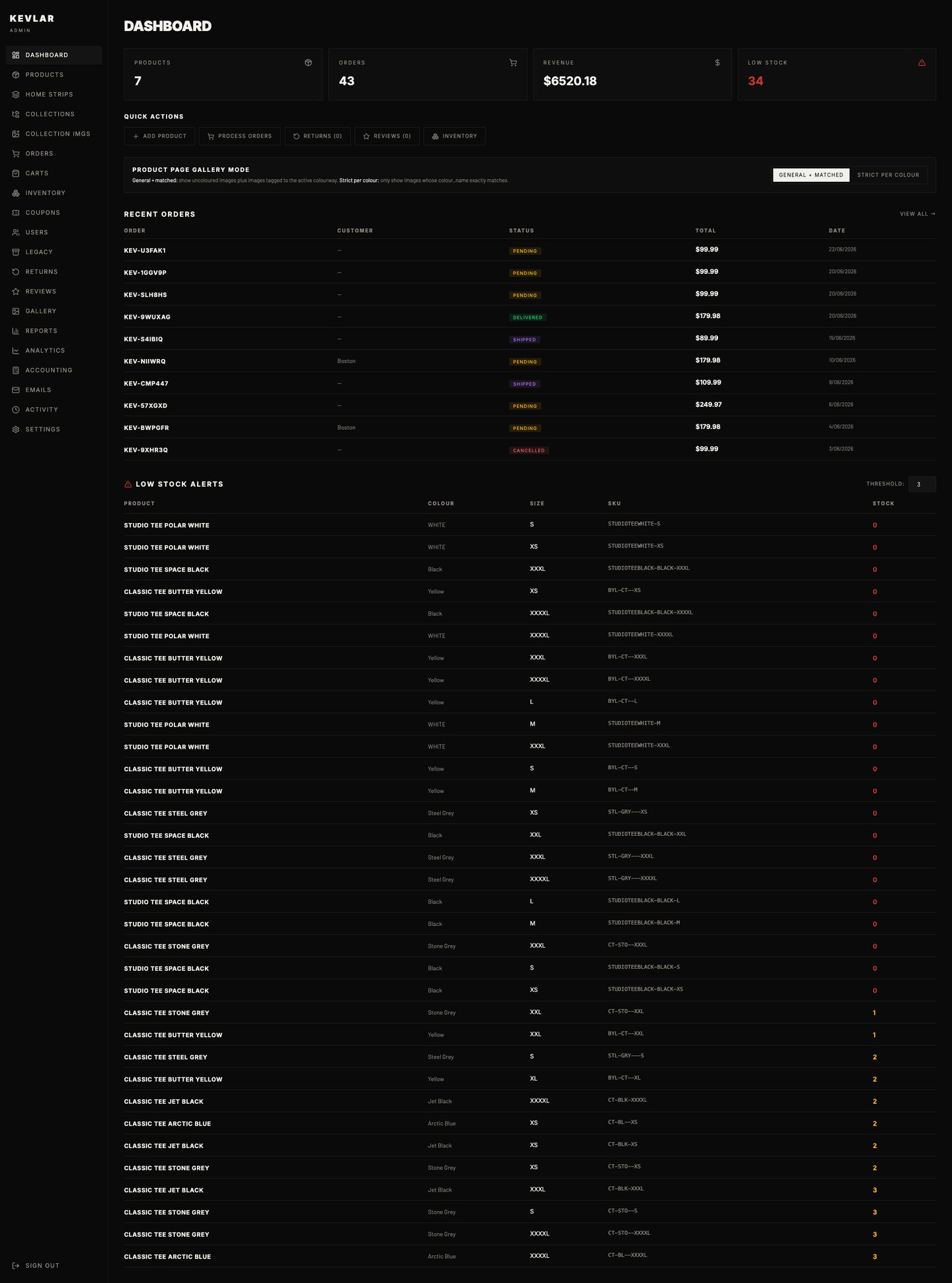
Nineteen sections in the admin. Products, collections, orders, carts, inventory, coupons, users, returns, reviews, gallery, reports, analytics, emails, activity. The dashboard opens on what actually matters: revenue, order count, and a low stock table listing every SKU at zero, by colour and size.
Inventory is tracked per variant, so CLASSIC TEE STEEL GREY XXXL is its own line with its own count. That is the difference between knowing you are low on tees and knowing exactly which thirty four variants are gone.
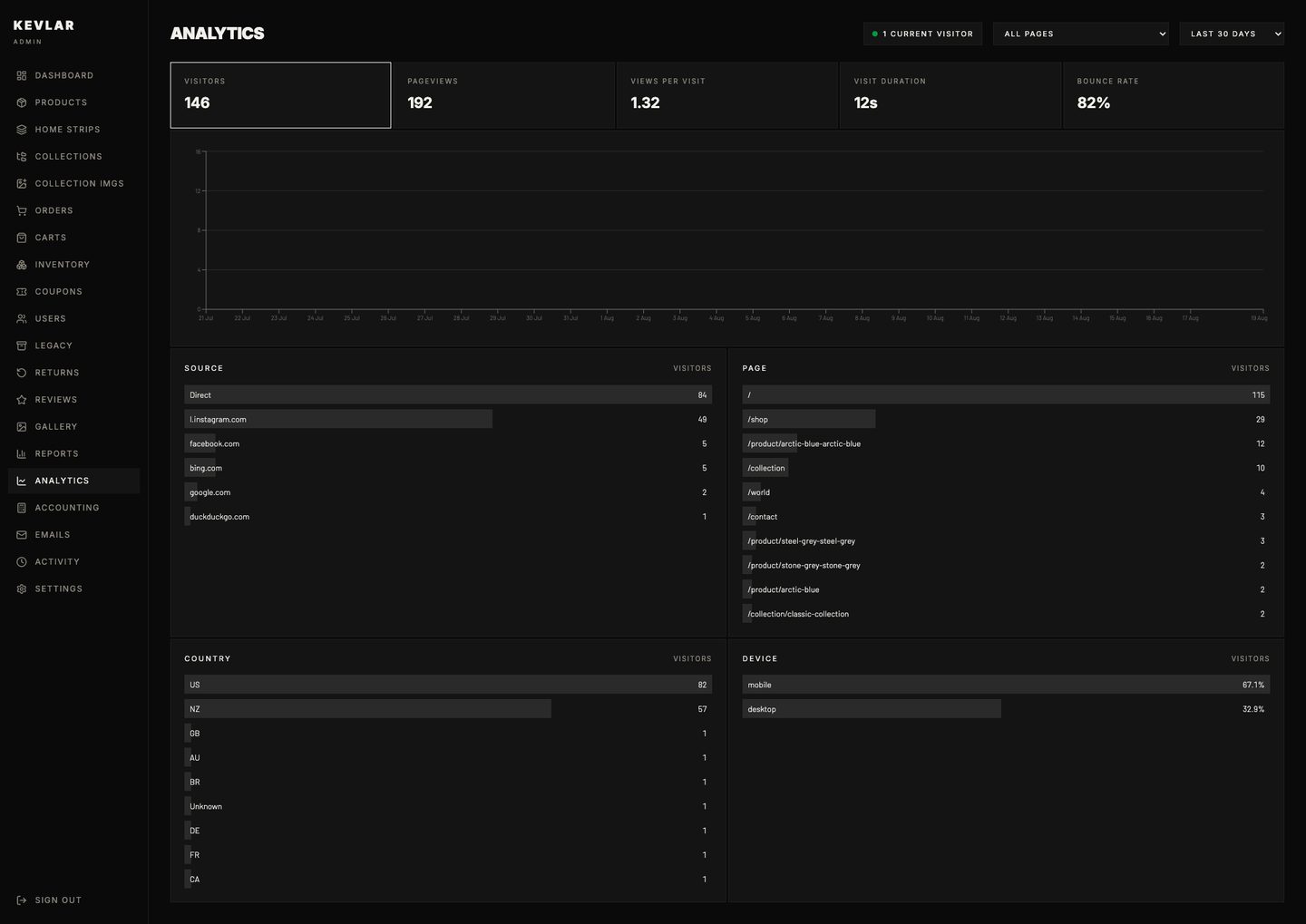
Analytics is built in rather than bolted on: visitors, pageviews, views per visit, duration, bounce, with sources, pages, countries and device split. No third party script, no data leaving the business.
The ledger
This is the part nobody expects to find inside a clothing store. KEVLAR carries a full double entry accounting system: chart of accounts, journal entries, purchases, sales, profit and loss, and a balance sheet.
The accounts are set up the way an accountant would want them. Stripe Clearing and Bank as assets, Accounts Payable as a liability, Owner Equity, then revenue split across sales, shipping and discounts given, and expenses split across cost of goods sold, Stripe fees, shipping costs and general. Every order that lands writes its own entries.
The label does not export anything to reconcile. The books are the platform.